Showing posts with label Oldies. Show all posts

Tuesday, 22 April 2014

Five Star Songs: Care of Cell 44

I don't watch Mad Men. I'd like to, I find the show to be very appealing, but I didn't jump on the bandwagon before the seasons piled up and it was too late. Anyway, the latest episode featured a song by The Zombies and it immediately stirred some waves between the oldies lovers. Slate wrote a nice article about it and I encourage everyone to read it. The song is called This Will Be Our Year and is taken from the band's 1968 masterpiece album, Odessey & Oracle. For today's edition of Five Star Songs, though, I chose a different song from that record, Care of Cell 44. It's the album opener and, as such, sets an incredibly high standard. Luckily enough, the rest of the LP keeps up wonderfully.


The Zombies are one of the lesser known bands from the 1960s, but also one of the very best. They released only two studio albums in their first incarnation, that lasted from 1962 to 1968. The debut is mostly significant for containing their biggest hit, She's Not There, which was recently used in a Coco Chanel commercial. But that song was only a sign of things to come, because The Zombies' vastly superior sophomore album is what they will be remembered for.

The Zombies weren't breaking any new ground with Odessey, as the psychedelic era had already been a few years underway by the time they recorded it. Originally, the album wasn't even very succesful. But time proved to be very generous to its blend of baroque pop and jazz, and it has since become one of those endearing classics. Rolling Stone has it at #100 in its "500 Greatest Albums of All Time" list, it's included in the book 1001 Albums You Must Hear Before You Die and, above all, is a staple of my humble CD collection. I hope you enjoy it too.

Tuesday, 21 January 2014

Five Star Songs: Lay Down (Candles in the Rain)

Tonight, I'm gonna share with you a song, that's been stuck in my head for these past few days.

When Melanie Safka, a twenty-two-year-old singer from New York and a prettier version of Carrie Fischer, was walking up the stage at Woodstock at 10:50pm on the first day of the festival, she was pretty much unknown. Half an hour later, she went down as a celebrity. During her set, people started lighting candles and lighters to fight the rain that had been falling. It must've been a powerful view to behold. Melanie later wrote a song about that experience and released it as a single from her third album, Candles in the Rain, in 1970. It became her breakthrough hit, reaching top ten on charts all around the world.

This is one of the best songs ever written about the festival. It's up there with Joni Mitchell's Woodstock and its cover by Crosby, Stills, Nash & Young. The gospel chorus is what really gets me, I just can't get enough of it. Your thoughts?

Wednesday, 28 August 2013

Five Star Songs: Ballad of Easy Rider

It was only a matter of time before one of The Byrds' songs appeared here. I just didn't know which. Many of the band's songs hold the five star rating in my library, and it's too difficult to pick only one. Well, at least it was before I stumbled across the wiki page of the song Ballad of Easy Rider, featured prominently in the film Easy Rider, and set my eyes on the following paragraph.

The star and script writer of Easy Rider, Peter Fonda, had initially intended to use Bob Dylan's song "It's Alright, Ma (I'm Only Bleeding)" in the film but after failing to license the track, Fonda asked Roger McGuinn of The Byrds to record a cover version of the song instead. Fonda also wanted Dylan to write the film's theme song but Dylan declined, quickly scribbling the lines - "The river flows, it flows to the sea/Wherever that river goes, that's where I want to be/Flow, river, flow" - on to a napkin, before telling Fonda to "give this to McGuinn. He'll know what to do with it." The lyric fragment was dutifully passed on to McGuinn, who took the lines and expanded upon them with his own lyrical and musical contributions to produce the finished song.


I think it's an interesting fact from making one of the quintessential films of the New Hollywood era, and it gives an idea about the relationship between Dylan and The Byrds.

I've been listening to the band all day. All twelve studio albums arranged chronologically, played front to back. It makes up for over seven hours of incredible listening experience. Right now, I think I like The Byrds a little bit more then every other band, including the Fab four.

Thursday, 15 August 2013

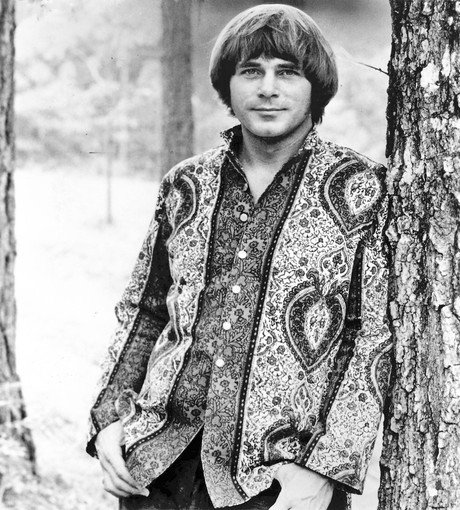
Joe South

Among all the famous songwriters from the 1960s, this one name is very easy to overlook. Unrightfully so. Joe South was a musician of great scope and incredible talent.


Born Joseph Alfred Souter in 1940, South started writing hits already in his late teens. Today, he is best remembered for songs like Hush, which he wrote for his former roommate Billie Joe Royal and which later became a huge hit and first top ten single for Deep Purple, or Lynn Anderson's version of (I Never Promised You A) Rose Garden, which went on to become one of the biggest hits of the 1970s, and for which Anderson won a Grammy and South received two nominations.

Joe South won two Grammys on his own, too, with the 1968 protest song Games People Play, which has been covered many times by the likes of Tom Jones, Tina Turner or Inner Circle. He was also a prominent sideman, having played on Aretha Franklin's Chain of Fools or Dylan's Blonde On Blonde album, among others. 

However, the monstrous success of Rose Garden in 1971 was overshadowed by a personal tragedy when South's beloved brother and frequent collaborator took his own life. Following his brother's death, South retired from the music bussiness and it seemed like he almost dropped off the face of the earth, living on royalties and making only seldom appearances. He died of heart failure in 2012.


I discovered Joe South about two weeks ago, while working on my own Best of the '60s compilation, which I'm about to share with everyone really soon. I was once again doing my research and his was the most interesting name to come out that I hadn't known before. One can only wonder how many great songs he could've written if it hadn't been for the unfortunate death of his brother.

Oddly enough, just as I was writing this post, Lynn Anderson's take on Rose Garden was playing on the radio...

Wednesday, 17 July 2013

Great White Pirate Wonder

Today at work, while browsing the music news on Pitchfork, I stumbled across an article from last September about Bob Dylan's famous 1969 album, Great White Wonder. I say famous, but the truth is I've never heard of it before, and it might've as well stayed hidden for anyone who isn't a die-hard Dylan enthusiast or who's knowlege of the folk singer's discography starts and ends with his biggest classics. (I may be just guessing.)

The reason why Great White Wonder is famous and significant, beside being a Dylan album, is that, at the peak of the vinyl era, it represented the beginning of the piracy phenomenon in the music bussiness. In today's words, it was one of the first leaks ever.

"While history records Great White Wonder as rock's first widely circulated bootleg, underground releases of its ilk are like the cool uncle of the digital leak."
The article starts with the emergence and history of the bootleg, which then waited six more years to be released in the usual manner, and at the end turns into a contemplation about piracy, its origin and present state. If you're interested, I highly recommend reading the whole thing, it won't take you more than half an hour. It is really an engaging piece of journalism.

...

In related news, the amount of piracy in Norway has fallen significantly. Perhaps there is a way after all. If only Amazon, Spotify and others would remove their country restrictions for Czech Republic. Something like Netflix would come in handy too. Whining and filing nonsensical lawsuits isn't the answer.

Sunday, 10 March 2013

Five Star Songs: Carrie Anne

Well, the start of my obsession with The Hollies dates back to the last summer. Since then, they have never left my playlist for more than several days, and many of their tracks make up a significant portion of my soundtrack of the sixties. Whenever I feel like listening to them, my song of choice is usually Carrie Anne. It was written by Allan Clarke, Graham Nash and Tony Hicks, recorded  by The Hollies on 1 May 1967 and released as a single in the same month. It became a hit in 1967, reaching #3 on the UK Singles Chart. It was also a hit in the US, peaking at #9 on the pop charts. (citation)


I just came across this amazing video. Needless to say, this live version is sligthly different from the studio recording, but is equally flawless and powerful. Every single time I listen to it, I have persistent urging to sing along to the chorus. At least in my mind, when there's people around.

Saturday, 23 February 2013

Sound City

Well, I just saw Sound City and must say it's rather brilliant. If you have at least a vague interest in rock music of the past forty years, go watch it now. Besides Dave Grohl expressing his love of analog recording, there's also a whole lot of valuable history lessons about making some of the best rock albums in history from the likes of Rick Rubin, Butch Vig, Stevie Nicks, Tom Petty, Krist Novoselic and fuc*ing Rick Springfield. Even Paul McCartney shows up near the end. You can check out the incredible list of albums that were made there on wikipedia.

Wednesday, 28 November 2012

Doom And Gloom


For anyone who thought "The Stones" were done. This brand new music video, directed by Jonas Ã…kerlund and starring Noomi Rapace, proves they've still got more energy than most much younger bands. Respect. Meanwhile, their newest compilation album GRRR! debuted at #3 on the UK Albums Chart.

Tuesday, 23 October 2012

Presenting: Nick Drake

For Marry. I'll just throw in a couple of videos and then write some description later... There's the link to Drake's Wikipedia profile.


My personal favourite from The Royal Tenenbaums soundtrack, Fly from his sophomore album, Bryter Layter.

Sunday, 21 October 2012

Emitt Rhodes


Wes Anderson's movies have always such carefully and well selected soundtracks. They usually feature a mix of more and less known artists from the sixties onwards, that go very well with the director's hipster image. The one that stuck with me the most is the soundtrack to The Royal Tenenbaums. Among The Rolling Stones or Paul Simon, it also contains a few hidden gems from musicians I'd never heard of before. Namely Emitt Rhodes, a man considered by many "the one man Beatles".

And that description is actually spot on. His music shows clear influence of the fab four and especially Paul McCartney. Rhodes' eponymous debut album sounds like what fans of Paul wanted to hear from him in the post-Beatles era. In 1970, the album made its way to #29 on Billboard charts.


Rhodes wrote all of the songs on his albums, he played all of the instruments, sang all of the vocals and recorded everything in his own primitive home studio. After three more years, three other records and a conflict with his label, Rhodes stopped performing and releasing new material. Which is a pitty, really. Because his fantastic eponymous album is a true masterpiece of the early 1970s.

Thursday, 6 September 2012

The Very Best Of The Byrds

Although I've been a huge fan of The Byrds for over a year, it wasn't until recently, that I have finally "acquired" all of the band's studio albums. This whole time, I was spinning their 1997 best of compilation almost constantly, and it gradually became one of my all time favourite CDs.


Notice the trademark glasses of the frontman Roger McGuinn :)

I haven't grown tired of the band's versions of the Dylan's classics, for which they became famous in the first place, such as their first single ever Mr. Tambourine Man, or Pete Seeger's adaptation of the Book of Ecclesiastes Turn! Turn! Turn! (To Everything There Is a Season) featured prominently on the Forrest Gump soundtrack. The Byrds crafted some of the best covers in the history of rock music. With richer intrumentation and Roger McGuinn's distinctive vocals, they had the ability to take those already brilliant songs to a whole new level. Not to speak about their originals, such as I'll Feel a Whole Lot BetterChestnut Mare or perhaps the first proper psychedelic rock anthem Eight Miles High.

Not unlike The Beatles, The Byrds introduced a unique amount of talent in each of its members. Most of whom found new success in their subsequent careers and inspired countless musicians of the generations that followed. Roger McGuinn, Gene Clark, David Crosby (of Crosby, Stills, Nash & Young) or Gram Parsons were all highly influential personas in the genres of psychedelic rock, country rock and folk.


The band's unmistakable sound owed a lot to Roger McGuinn's jangly guitar, the twelve-string Rickenbacker. The main reason I was hooked instantly, though, were the ethereal melodies. The Byrds were masters at crafting them, and were true equals to their contemporaries, The Beatles and The Beach Boys.

The CD is a selection of 27 songs from the first five years of the band's career (1965 to 1970) and really doesn't miss anything essential. Although the band's style changed significantly over the course of the years, from blending the folk revival and Beatlesque rock to psychedelia and country, the whole compilation still feels like a cohesive album. I'd even go as far and say that The Very Best of The Byrds is what "1" was to The Beatles. The ultimate collection. I'd strongly recommend it to anyone with at least a vague interest in the '60s music. (Or anyone, who still thinks today's indie folk rock bands do something special.)


Well, I had to get this out of my system. Since the first time I heard Turn! Turn! Turn! to this day, my love and respect for The Byrds have been only growing. They are one of the reasons why the music of the '60s was the best. And that's not an opinion, it's a fact.

Sunday, 29 July 2012

Far Far Away

I just can't get the chorus out of my head. It's been stuck there for the last few days. One more reason to love the seventies.

Thursday, 6 October 2011

Electric Light Orchestra

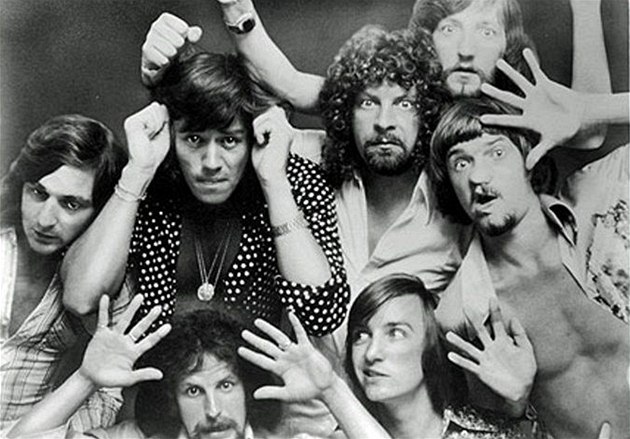
Today, while watching David Tennant's Doctor Who episodes, one of the characters confessed to a love of a band I've never even heard of. Not sure how this could happen, because according to Wikipedia, Electric Light Orchestra (or ELO for short) "collected 19 CRIA, 21 RIAA and 38 BPI awards, and sold over 50 million records worldwide during the group's active period of recording and touring." Obviously, they were one of the biggest bands of the 1970s. Discovering them just made my day.


Hit the jump to hear some songs...